

Back in 12th standard, Biology was a game of diagrams and facts meant to be reproduced for the board exams. I remember the chapter on genetics. There was a small, clinical box dedicated to Down Syndrome. My entire world of knowledge was exactly one sentence: “The presence of an additional copy of chromosome number 21 causes it.” To my seventeen-year-old self, it was just a biological error.
When I cleared the pre-medical entrance exam and entered MBBS, the glitch got a bit more detailed, but it remained cold and scientific. In the anatomy class, I finally saw it on a karyotype. A messy map of human chromosomes where, at the 21st spot, three little sticks stood instead of two. In Pediatrics, I learned to spot the clinical signs. We were taught to look for the flat facial profile, the slanted eyes, and the single transverse palmar crease. I saw a few cases during my clinical postings, but they were just patients in a long queue. I checked their hearts, noted their developmental delays, and moved to the next patient.
Then came my MD in Pediatrics. This is where the textbook definitions finally started to grow a heart. Working in the wards and the Outpatient Department (OPD), I wasn’t just looking at symptoms anymore. Rather, I was looking at families. I began to realize that children with Down Syndrome were incredibly pleasant individuals. There was a specific kind of warmth in them, an unfiltered joy that seemed to radiate even in a crowded hospital hallway. I noticed how deeply attached they were to their parents.
However, despite this emotional connection, I still carried a mental “ceiling” for them. I assumed they would always underperform. In my head, I had already capped their potential. But as I spent more time with them, I started to understand that their future could be changed with our intervention. I realized that if we diagnose them early, the entire trajectory changes. If we start physiotherapy in infancy, monitor their blood for hypothyroidism, and provide a conducive, encouraging environment, these children wouldn’t just sit on the sidelines.
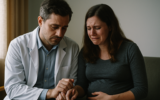
The final, most profound shift happened during my DM in Medical Genetics. Now, I was at the very beginning of the story, doing prenatal counseling for pregnant women who came with a high-risk report. In my early days of DM, when a couple came with a confirmed report of Trisomy 21 in their fetus, I was very clinical. I focused almost entirely on the medical hurdles. I used to counsel the parents about the heart defects and the intellectual challenges. I felt it was my duty to prepare them for the hardest parts.
However, as time passed, I became more accommodating. My approach softened. Don’t get me wrong. As a doctor, I still give every bit of medical information, but I also tell them about the “good sides.” I’ve realized that while they might find it difficult to perform complicated tasks requiring complex calculations, that doesn’t mean they can’t work. With proper support in childhood, they can grow up to be financially semi-independent. Today, many individuals with Down Syndrome are doing well as photographers, models, and chefs. They can hold a job, earn for themselves, and live with dignity.
I’ve come to realize that my job isn’t to make the decision for the parents. Whether they choose to continue the pregnancy or not is a deeply personal choice. My job is simply to ensure they are making an informed decision.
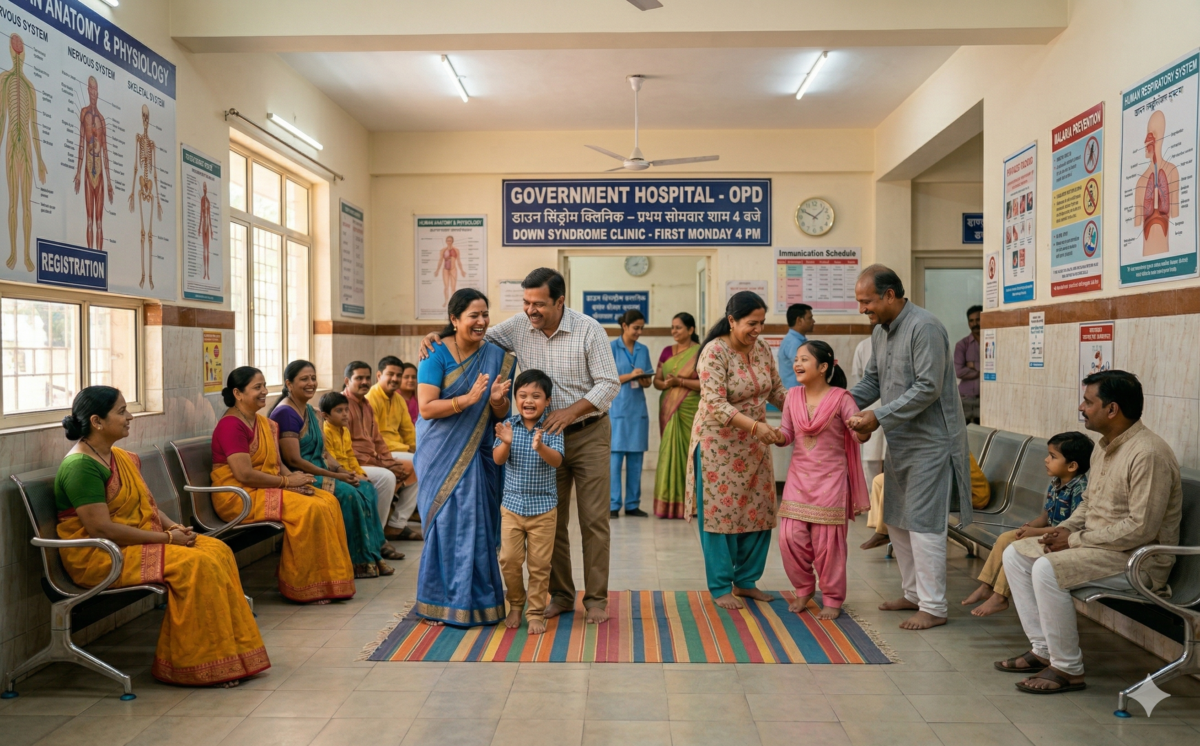
The first Monday evening of every month was our dedicated Down Syndrome Clinic, and honestly, it was one of my favorite parts of my practice. There is a different energy in the air. These nice, innocent beings come to our clinic for their regular check-ups, and the atmosphere is far from the gloom I once imagined. Most parents who walk through those doors are genuinely happy. They have moved past the initial shock and have fully accepted the diagnosis. It’s heartening to see them enjoying the way their kids are developing, celebrating every small victory and every new milestone.
I have one particular patient who is the absolute life of the clinic. The moment I play the “Fuk Fuk Fukrey” song, he starts dancing with such pure, uninhibited joy. In those moments, you don’t see a syndrome but a happy child who loves music.
Looking back, I’ve learned that a doctor’s greatest tool isn’t just the karyotype but the ability to see the human being behind the numbers. The extra chromosome is a challenge, but it is not a dead end. It is simply a different path, and with the right hand to hold, it can be a beautiful one.